
I come from Shanghai, where the number of coffee shops reached 10,336 in 2025.[1] I also previously served as the first General Manager of Yum China's first incubated coffee brand.
So I admit: I am rather demanding about coffee.
Bacha is not my favourite.
But I still buy it.
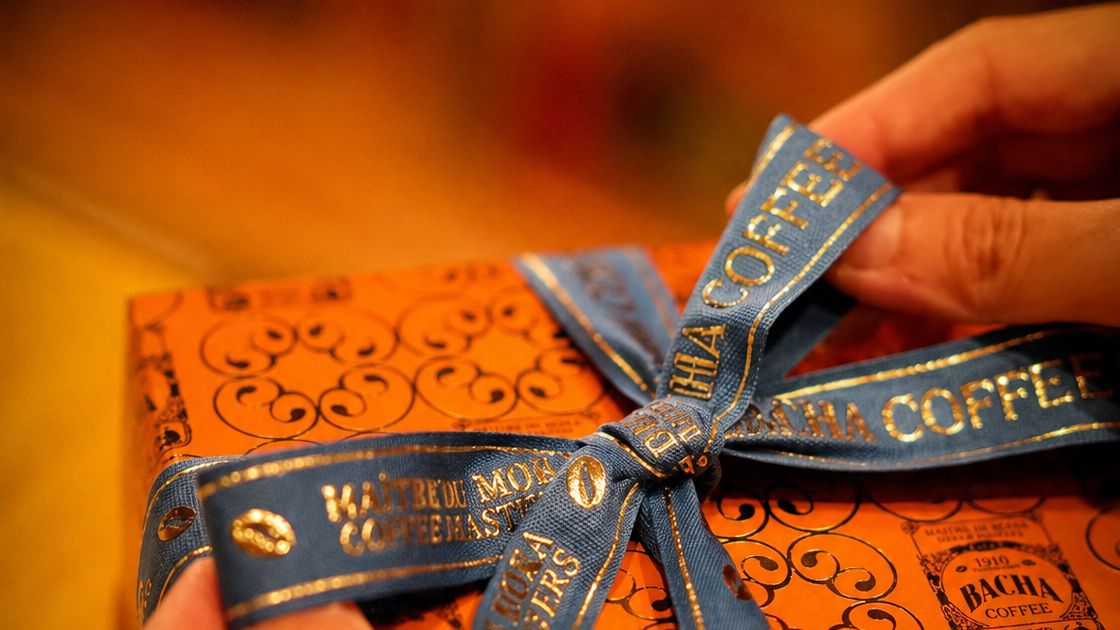
Before boarding a flight at Changi Airport, I often stop at Bacha to pick up gifts for business partners. I still remember handing one of its orange boxes to a Korean buyer and watching her eyes light up before she had even tasted the coffee.
That moment stayed with me.
She was responding first to the packaging, the sense of discovery and the pleasure of receiving something that felt special. The coffee came later.
This is the contradiction that makes Bacha commercially fascinating: I may not consider it the best coffee, yet I continue to buy it—and I know exactly whom I want to give it to.
The latest publicly reported financial results suggest that many consumers are making a similar decision. Bacha generated S$95.5 million in revenue in 2023—up 146% year on year—and recorded its first net profit of S$2.2 million.[2][3]
By February 2026, it had expanded to 42 locations across 16 cities, including Singapore, Paris, Tokyo, Seoul, Dubai, Hong Kong, Taipei and Beijing.[4]
Perhaps coffee is not the best way to understand Bacha.
The more interesting question is: What business is Bacha really in?
THE STORY IS BETTER
THAN THE COFFEE.
Walk into The Arch at Singapore Changi Airport and it feels closer to a Louis Vuitton boutique than a coffee shop.
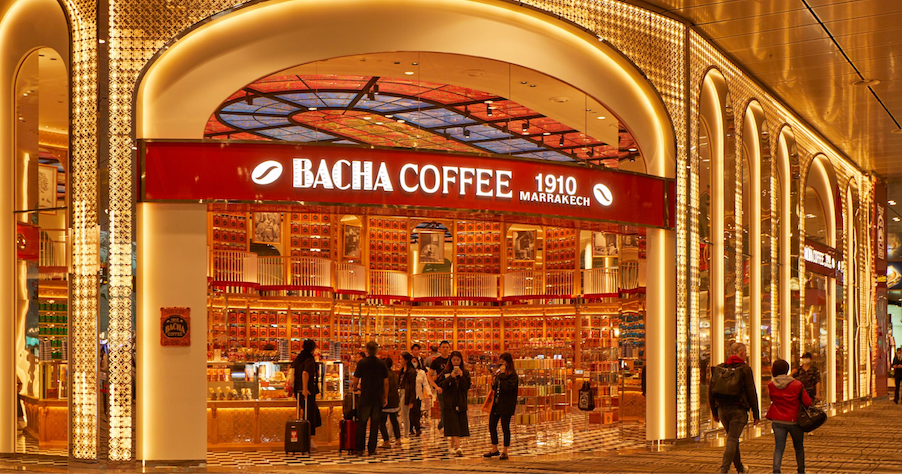
The 650-square-metre flagship reportedly cost S$10 million to build.[3] Its monumental arches, chequered floors, brass detailing and theatrical displays recreate an imagined Marrakech inside an airport terminal.
That investment would look excessive if the site were evaluated only as a café. It makes more sense when understood as three assets in one:
- a high-volume retail outlet;
- a permanent global advertising campaign;
- and a gift-conversion machine.
The coffee room creates desire. The boutique monetises it.
Bacha offers more than 200 varieties of 100% Arabica coffee, but customers do not need to understand every origin, roast or flavour before buying.[4] The visual language does much of the selling.
The orange boxes are recognisable from a distance. Gold detailing signals value. Individual sachets make the product easy to use and share. Rigid packaging gives the purchase physical weight before it is opened.
Coffee becomes a souvenir.
The souvenir becomes a gift.
The gift becomes affordable luxury.
This is especially powerful in travel retail. Travellers are short of time, emotionally primed to bring something home and more willing to pay for products that feel distinctive, portable and ready to present.
According to CEO Taha Bouqdib, Bacha's Changi stores became popular destinations for last-minute gifts. Retail and distribution account for approximately 70% of sales.[3]
That figure is more revealing than the length of the queue outside the café.
If most revenue came from cups consumed at tables, Bacha would remain a premium hospitality business—beautiful, labour-intensive and constrained by seating capacity.
Packaged retail changes the economics.
One customer can buy several boxes without occupying a table. The product can be sold through boutiques, airports, department stores, hotels, distributors and e-commerce. The experience is created in the flagship, but the revenue can travel far beyond it.
This also changes how we should interpret Bacha's extravagant stores. They are not merely expensive interiors. They are brand-production facilities. Every arch, tin and shopping bag generates photographs, memories and social content.
In April 2025, Bacha extended this strategy by opening a three-storey, 1,500-square-metre flagship on the Champs-Élysées in Paris.[6] It subsequently entered Tokyo's Ginza and Bangkok's Siam Paragon in December 2025 before opening in Beijing in early 2026.[4][7][8]
Bacha is not expanding like a conventional coffee chain seeking maximum convenience. It is selecting locations that already carry cultural and luxury value—and borrowing some of that value for itself.
It is planting palaces rather than opening cafés.
FROM TWG TO BACHA:
THE BUSINESS OF SELLING HERITAGE.
If Bacha feels familiar, it is because elements of its commercial playbook were already tested through TWG Tea.
TWG was established in Singapore in 2008. Yet “1837” appears prominently in its identity, celebrating the year Singapore became a trading post for teas, spices and fine epicurean products—not the year TWG began.[9]
That was a remarkably effective branding decision.
The number gives a relatively young company the visual authority of a historic luxury house. Gold tins, ornate salons, extensive assortments and elaborate service rituals reinforce the impression.
TWG did not invent tea. It built a distinctive, globally recognisable luxury system around it.
In 2023, TWG generated S$132 million in revenue, up 63%, while net profit reached S$4 million. At that point, it operated 79 outlets across 18 countries.[3]
Bacha uses many of the same commercial building blocks:
- a familiar everyday beverage;
- an extensive product assortment;
- a strong origin story;
- codified visual branding;
- theatrical physical retail;
- accessible entry prices;
- and packaging designed for gifting.
But Bacha improves on the formula through a more tangible historical asset.
The brand traces its origins to Dar el Bacha, a palace built in Marrakech in 1910. After the palace was restored as a museum, Morocco's King Mohammed VI invited French-Moroccan entrepreneur Taha Bouqdib to recreate its historic coffee room.[3][5]
Bouqdib secured the global franchise from Morocco's National Foundation of Museums. The restored Marrakech coffee room and Bacha's first international boutique at ION Orchard in Singapore both opened in 2019.[3]
This is what I would call heritage arbitrage: taking a culturally rich but geographically contained story, translating it into products and rituals, and distributing it through global luxury retail.
The history comes from Morocco.
The operating platform comes from Singapore.
The experience is designed for the world.
This does not mean that the story is false. It means that heritage alone does not create a scalable business. Heritage must be edited, designed, packaged and delivered consistently across cultures.
Many brands possess authentic history but fail to make it commercially relevant. Others manufacture nostalgia without sufficient substance. Bacha combines a real historical setting with the discipline of a modern retail operator.
TWG proved that this model could travel.
Bacha refined it with stronger heritage, more theatrical retail and a product particularly suited to airports, hospitality and gifting.
It is not a copy of TWG. It is the second-generation model—and the family resemblance is no coincidence: both brands sit within V3 Gourmet.
SINGAPORE AS A GLOBAL
BRAND LABORATORY.
Singapore plays an important role in this story.
Its domestic market is small, but it brings together affluent residents, international travellers, sophisticated malls, premium hospitality, multicultural talent and one of the world's most connected airports.
A brand built in Singapore often has to think regionally from the beginning.
Bacha used the city not as its origin story, but as its operating laboratory. Here, the company could test pricing, packaging, store formats, service standards and travel-retail demand among consumers from across Asia and beyond.
Singapore also provides credibility as an international operating base without overpowering Bacha's Moroccan identity.
This combination may be one of Singapore's most interesting brand-building capabilities: connecting culture from one market, capital from another and consumers from many others—then turning those ingredients into a repeatable global system.
CHINA IS
THE REAL TEST.
In early 2026, Bacha opened its first mainland China store at Beijing's China World Mall.[4]
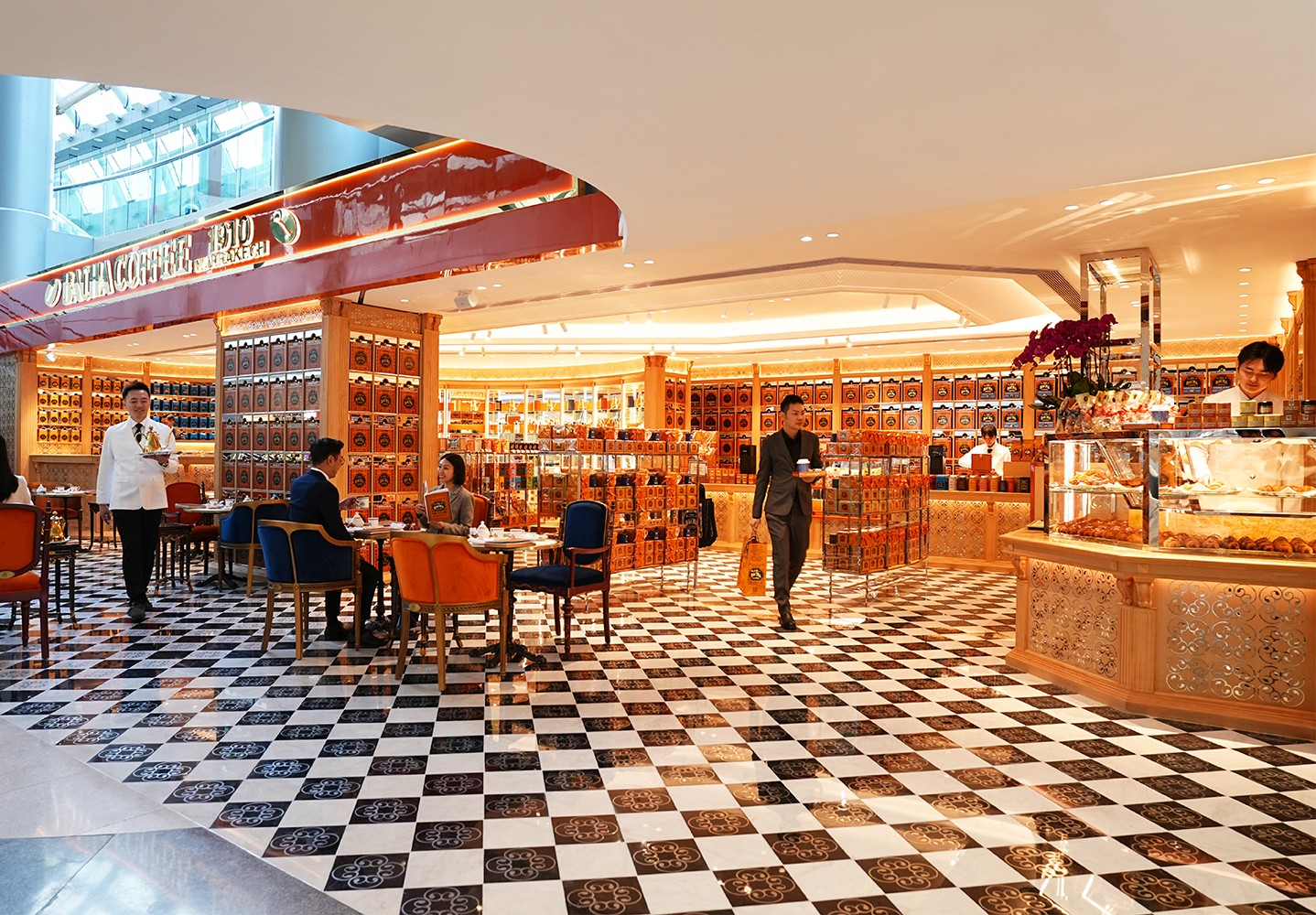
The 210-square-metre location combines a boutique, takeaway service and a 25-seat Coffee Room. It sells loose and packaged coffees, accessories and gift boxes across a range of more than 200 coffees sourced from 35 growing regions.[4]
The choice of location and format is revealing.
Bacha is entering China through premium retail—not by joining the mass coffee-chain race.
China does not need another coffee chain.
The market already has international incumbents, fast-growing local specialists and aggressively priced digital players. If Bacha competes primarily on caffeine, convenience or store count, it enters the wrong battle.
Its real competitors may be premium tea, chocolate, fragrance and festive gift boxes—the products consumers choose to express taste, status and generosity.
That creates opportunities around Lunar New Year, Mid-Autumn Festival, corporate gifting, weddings, birthdays and travel. Bacha carries recognisable luxury codes at a price far below a designer handbag or watch.
However, China also exposes the weakness that beautiful packaging can hide.
Chinese consumers are exceptionally fast at decoding brand formulas. A spectacular opening can generate queues, photographs and social-media attention, but novelty does not guarantee loyalty.
Bacha must answer three commercial questions:
THE RELEVANCE TEST
Can a Moroccan heritage story become meaningful to Chinese consumers beyond its exotic visual appeal?
Cultural relevance requires more than releasing a red box for Lunar New Year. Bacha needs to understand the rituals behind Chinese gifting: who gives, who receives, what the occasion represents and what the gift communicates about the relationship.
THE REPEAT TEST
Will customers repurchase after the first orange box has been opened?
Gifting can drive trial, but the product must eventually create its own reason to return.
The store may generate attention. Repeat purchase determines whether Bacha has built a market.
THE SCALE TEST
Can Bacha expand without destroying the exclusivity that justifies its premium?
Too few stores will restrict awareness and revenue. Too many may make the brand ordinary.
Bacha should not measure success in China primarily by the speed of store openings. The more meaningful indicators will be repeat purchase, gifting penetration, customer retention and the proportion of demand that remains after launch excitement disappears.
MY VERDICT:
CAN BACHA WIN CHINA?
Possibly—but its success abroad should be treated as a starting advantage, not a winning formula.
Bacha already knows how to create desire. China will test whether it can convert that desire into cultural relevance, repeat demand and sustainable economics.
Winning the first year requires spectacle, distribution and marketing.
Winning the next ten years requires product truth, consumer intimacy and disciplined expansion.
Becoming a hundred-year brand requires something harder: earning a lasting role in people's lives.
TWG taught Singapore how to design global affordable luxury. Bacha showed how to scale it internationally.
China will reveal whether that playbook can be rebuilt—not merely repeated.
The real question is not whether Chinese consumers will visit Bacha, photograph the store or buy the first orange box.
It is whether they will still choose Bacha after the novelty is gone.