
I recently watched a Diary of a CEO debate in which Ed Zitron, Roman Yampolskiy, Nate Soares and Andrew McAfee argued over an unsettling question: could AI eventually cause human extinction?[1]
They disagreed sharply over the probability: 1%, 10% or even higher?
But another question stayed with me:
Why do we debate an uncertain future catastrophe so intensely while often treating climate change - a crisis already unfolding - as background noise?
Before AI has the chance to end humanity, could we already be heading towards a climate catastrophe of our own making?
Perhaps it is because climate change rarely arrives as one dramatic event. It accumulates through billions of ordinary decisions: what we produce, how we package it, what we consume and what happens after we throw it away.
That is why sustainability has always been close to my heart. It is not only about distant targets or corporate commitments. It is about redesigning everyday systems so that responsible behaviour becomes practical, repeatable and economically viable.
Singapore's new Beverage Container Return Scheme is one such experiment.
From 1 October 2026, the same bottle will become worth ten cents more in Singapore.
The drink will not change. The plastic will not change.
What changes is the system around it.
Clean is not the same as circular.
Singapore is one of the cleanest cities in the world. But clean is not the same as circular.
In 2025, Singapore's overall recycling rate was 52 per cent, while its domestic recycling rate remained at only 11 per cent.[2]
This is not simply a failure of awareness. The problem is also what happens after an item enters the bin.
Paper, plastic, glass and metal are placed together in Singapore's blue recycling bins. This is convenient for households, but food, liquids and non-recyclable items can contaminate the collected material. Something placed in a recycling bin may still be rejected and incinerated.
Singapore's small domestic recycling market presents another challenge. Some recovered materials must be exported for processing, making their viability dependent on transportation costs, overseas demand and volatile commodity prices.
Recycling is not completed when a consumer uses the correct bin.
It is completed only when the material retains enough quality and value to be used again.
Sorting is an action. Circularity is an outcome.
What Japan, Germany and South Korea teach us.
International experience shows that no country has completely solved the waste problem. Different systems solve different parts of it.
Japan: discipline does not guarantee circularity.
Japan is admired for meticulous waste separation. Municipalities issue detailed instructions governing how residents separate bottles, cans, paper, plastics and combustible waste. In some communities, disposal rules vary by product, material and collection day.
This creates strong public discipline and relatively clean streets. But Japan also relies heavily on incineration. According to Japan's Ministry of the Environment, its municipal waste recycling rate was 19.5 per cent in fiscal year 2023, while the country operated 1,004 waste-incineration plants.[3]
Some incinerators recover energy, but burning waste - even with energy recovery - is not the same as returning material to production.
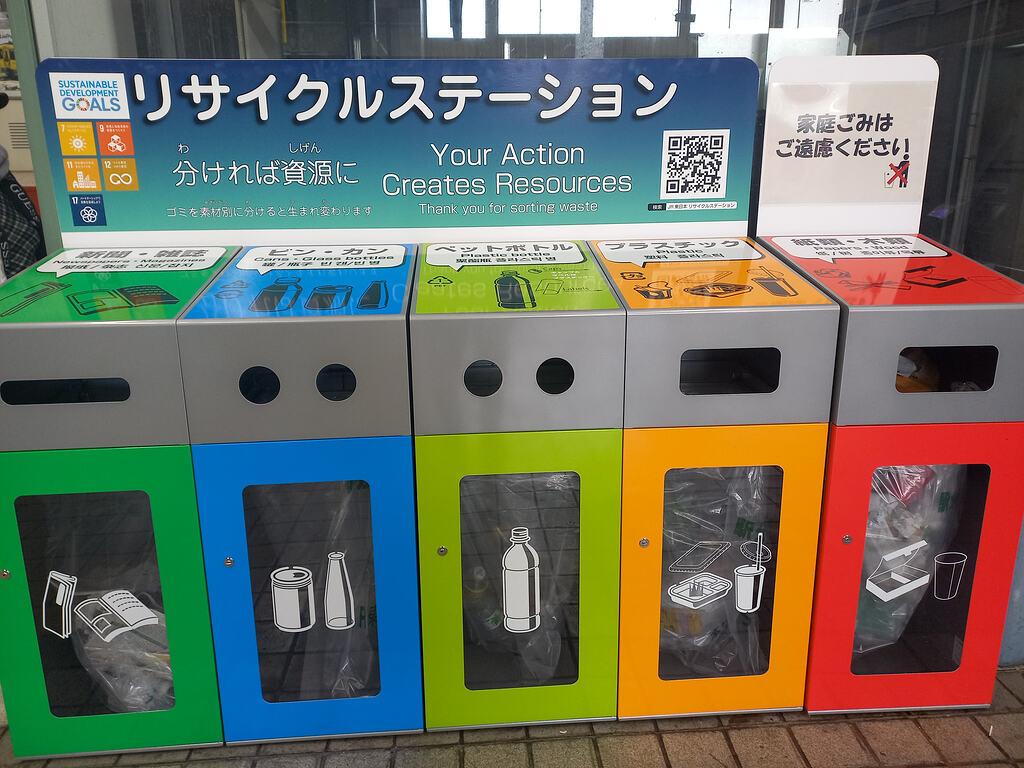
Lesson: consumers can separate perfectly, but circularity still depends on what the system can do with the material.
Germany: collection works when value is visible.
Germany's deposit-return system provides a more direct reference for Singapore. Consumers commonly pay a €0.25 deposit on eligible single-use beverage containers and recover it when they return the empty container. Germany's system is widely reported to achieve return rates of approximately 98 per cent for eligible containers.[4]
Germany also combines deposits with producer-responsibility rules, established sorting infrastructure and developed markets for recovered materials. Its municipal waste landfill rate is exceptionally low.[5]
However, even Germany has not made every type of packaging truly circular. High-quality PET bottles and aluminium cans have relatively strong recovery economics. Mixed or low-value plastics remain much harder to recycle profitably and may be downcycled, exported or used for energy recovery.
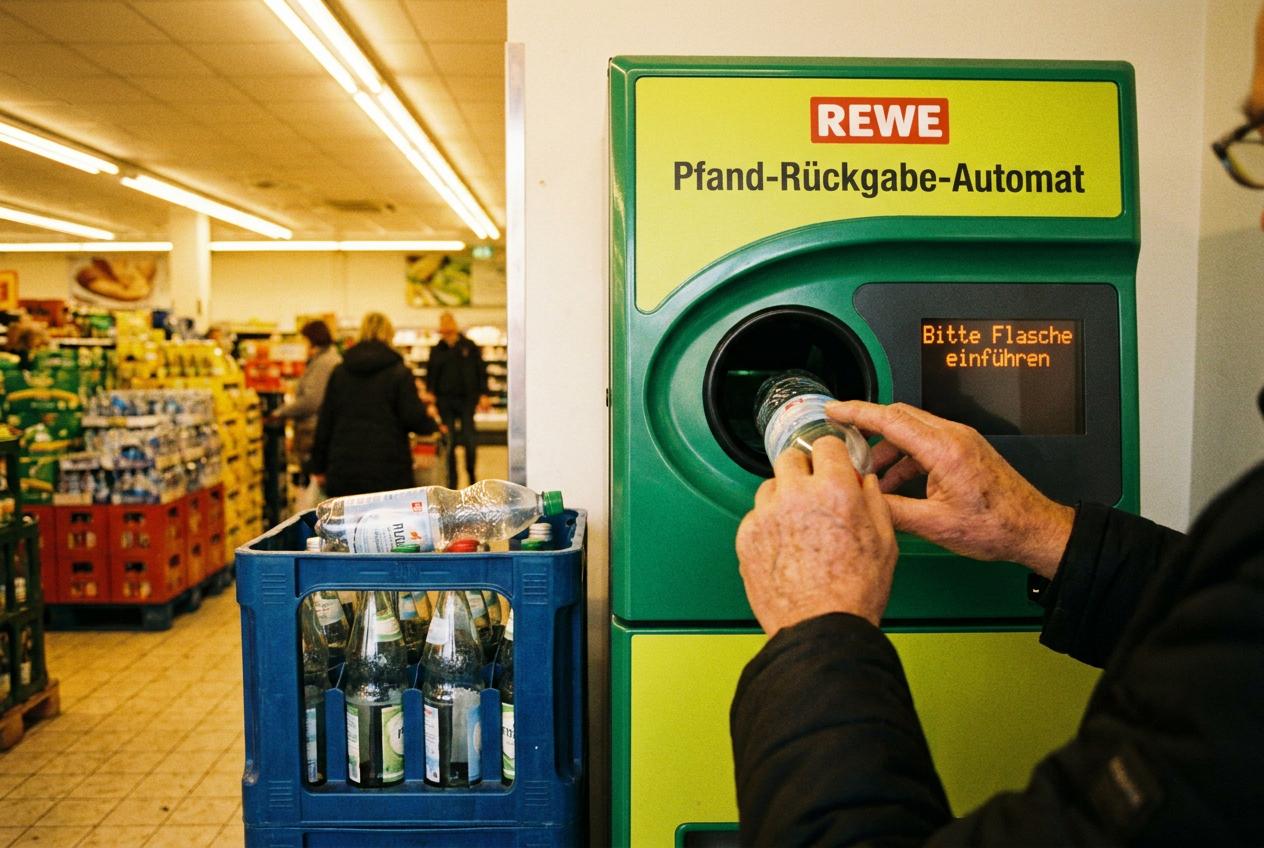
Lesson: a deposit can produce very high collection rates, but the material, product design and end market determine whether the result is genuinely circular.
South Korea: measure the waste, change the behaviour.
South Korea offers a different lesson through its management of food waste. Households in many areas use designated bags or RFID-enabled bins that identify users and charge according to the weight of the food waste they discard.[6]
In 2023, South Korea reportedly processed 96.8 per cent of its 4.81 million tonnes of food waste. Recovered material was directed into products including animal feed, compost and biogas.[7]
But processing is not the same as circularity. The quality of the output, contamination levels and sustained demand for compost or feed remain important.
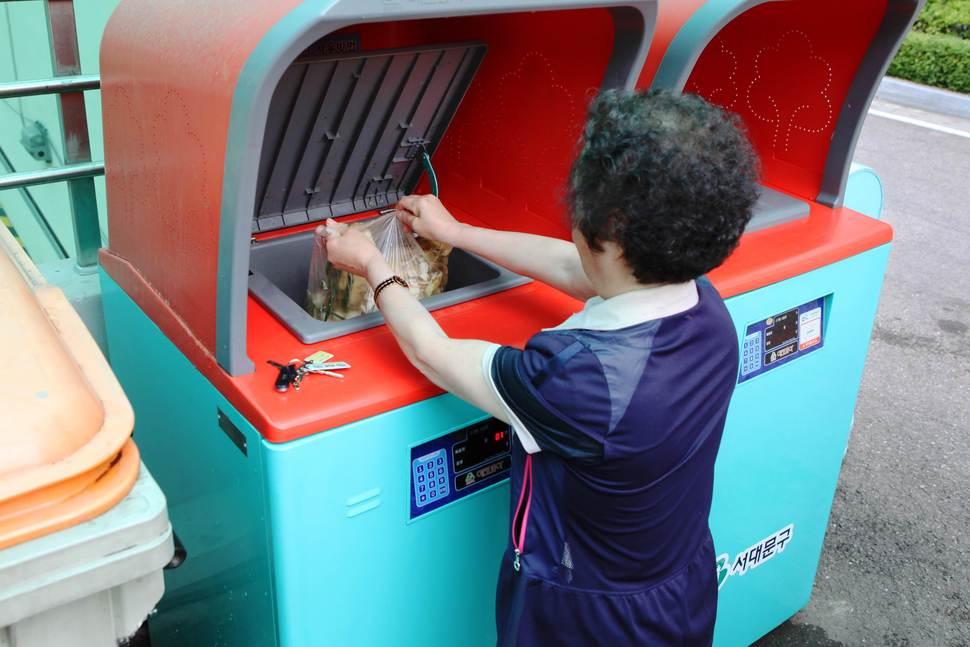
Japan shows that excellent sorting can still lead to incineration.
Germany shows that high return rates do not make every material economically recyclable.
South Korea shows that processing waste does not automatically create valuable demand for the output.
Collection is necessary. It is not sufficient.
Ten cents redesigns the decision.
Singapore's Beverage Container Return Scheme creates a separate collection pathway for regulated plastic and metal beverage containers between 150 millilitres and three litres.
From 1 October 2026, eligible products must carry the BCRS Deposit Mark. Consumers will pay an additional ten cents when purchasing the drink and recover it by returning the empty, uncrushed container with its barcode intact.[8]
The scheme is expected to begin with more than 1,000 reverse vending machines. More than 90 per cent of HDB households should be within a five-minute walk of a return point, while the network is expected to expand to approximately 2,000 machines during the first year.[8]
Singapore places more than one billion eligible beverage containers on the market annually. The scheme is expected to recover more than 16,000 tonnes of material each year.[8]
But the machine is not the real innovation.
The innovation is the incentive architecture around it.
A bottle placed in a blue bin offers no immediate consequence. A bottle carrying a deposit retains visible financial value after the drink has been consumed. Throwing it away now feels less like disposal and more like losing money.
The material did not suddenly become more valuable. The system made its remaining value visible.
Pay. Consume. Return. Recover.
From moral appeal to designed behaviour.
Many sustainability campaigns depend on moral instruction: recycle more, waste less, make the responsible choice.
These messages are important, but awareness alone rarely changes behaviour at scale. Consumers are busy, habits are automatic and sustainable choices often require additional effort with little immediate reward.
Return Right takes a different approach. It assigns the empty container financial value, provides a physical return network and incorporates responsible disposal into an everyday commercial transaction.
But success will depend on more than the ten-cent incentive. Machines must be convenient, reliable and easy to use. Refunds must be immediate. Labels must be clear. Retailers must explain the deposit without making consumers feel that prices have quietly increased.
A sustainability system is still a consumer experience.
If returning a bottle involves long queues, malfunctioning machines or confusing eligibility rules, ten cents may not be enough. The design of the last metre will influence the performance of the entire system.
A returned bottle is not yet a circular bottle.
This is where the harder questions begin.
The National Environment Agency states that recovered plastic and metal will be made into new products.[9] But "new products" can mean very different things.
A PET bottle might become another food-grade bottle. It might instead become textile fibre, construction material or another lower-value product. The second route extends the material's useful life, but it may still become waste after one more cycle.
True closed-loop recycling is more demanding. It means preserving sufficient material quality for equivalent use: bottle to bottle, or can to can.
Based on the official information publicly available as of 22 September 2026, NEA and Return Right explain how containers will be identified, collected and refunded. However, the published materials do not yet provide a complete breakdown of the companies that will process the materials; whether processing will take place locally or overseas; the proportion becoming another food-grade bottle or can; the proportion converted into lower-value products; contamination, rejection and processing losses; or how much virgin plastic and metal the system will displace.[8][9][10]
This does not mean the material will not be recycled. It means the circular outcome has not yet been publicly demonstrated in sufficient detail.
A credible circularity report should disclose the number of eligible containers placed on the market; return and contamination rates; processing locations and partners; material recovery and rejection rates; the final products created; the proportion returned to equivalent packaging; and the amount of virgin material displaced.
We know how the bottle will return. We do not yet know exactly what it will become.
Responsibility should follow the package.
Return Right is Singapore's second Extended Producer Responsibility scheme, following the framework introduced for electronic waste. The scheme is operated by BCRS Ltd., an industry-led, not-for-profit company licensed by NEA.[8]
That matters because it changes where responsibility sits.
Traditionally, responsibility for packaging passed quickly to the consumer. The brand sold the product; the consumer finished it; the empty package became somebody else's problem.
But brands made the packaging decisions in the first place. They chose the material, colour, cap, label, adhesive and format. They decided whether the packaging could be reused, identified, separated or recycled economically.
Brands cannot manufacture waste and then transfer the entire burden of solving it to consumers.
Responsible brands should eliminate unnecessary packaging; design remaining packaging for efficient identification and recovery; avoid material combinations that damage recyclability; help fund collection and processing; create stable demand for recovered materials; use verified recycled content wherever technically possible; and report what happened after collection.
Most importantly, brands must become buyers of the materials their systems recover.
Without reliable demand for recycled resin and metal, recyclers may be left with collected material that has little commercial value. Circularity cannot depend solely on whether consumers return a bottle. It also depends on whether manufacturers are prepared to put that material back into production.
The package does not disappear when the product is sold. Its second life is part of the business model.
Beautiful, responsible brands.
At GNOVA, our ambition is to help build brands that are both beautiful and responsible.
These should not be competing ideas.
Beauty creates desire. Responsibility determines whether that desire can be sustained without transferring unacceptable costs to society and the environment.
A beautifully designed package that becomes unrecoverable waste is incomplete design. A sustainability claim unsupported by material choices, infrastructure and measurable outcomes is incomplete responsibility.
The next generation of brand builders must therefore think beyond the shelf: What happens before the consumer buys the product? What happens while the consumer uses it? What happens after the package becomes empty? Who remains accountable for its final destination?
The next generation of brand building is not about making sustainability look beautiful.
It is about making beautiful brands genuinely responsible.
Singapore's real experiment.
Singapore is a compelling laboratory for circular systems. It is a compact market with strong public infrastructure, sophisticated retailers, digitally connected consumers and an unusual capacity to coordinate government, industry and communities.
Return Right may prove that policy, financial incentives and convenient infrastructure can persuade consumers to return more containers - and separate them more cleanly from other waste.
But a high return rate does not, by itself, create a circular economy.
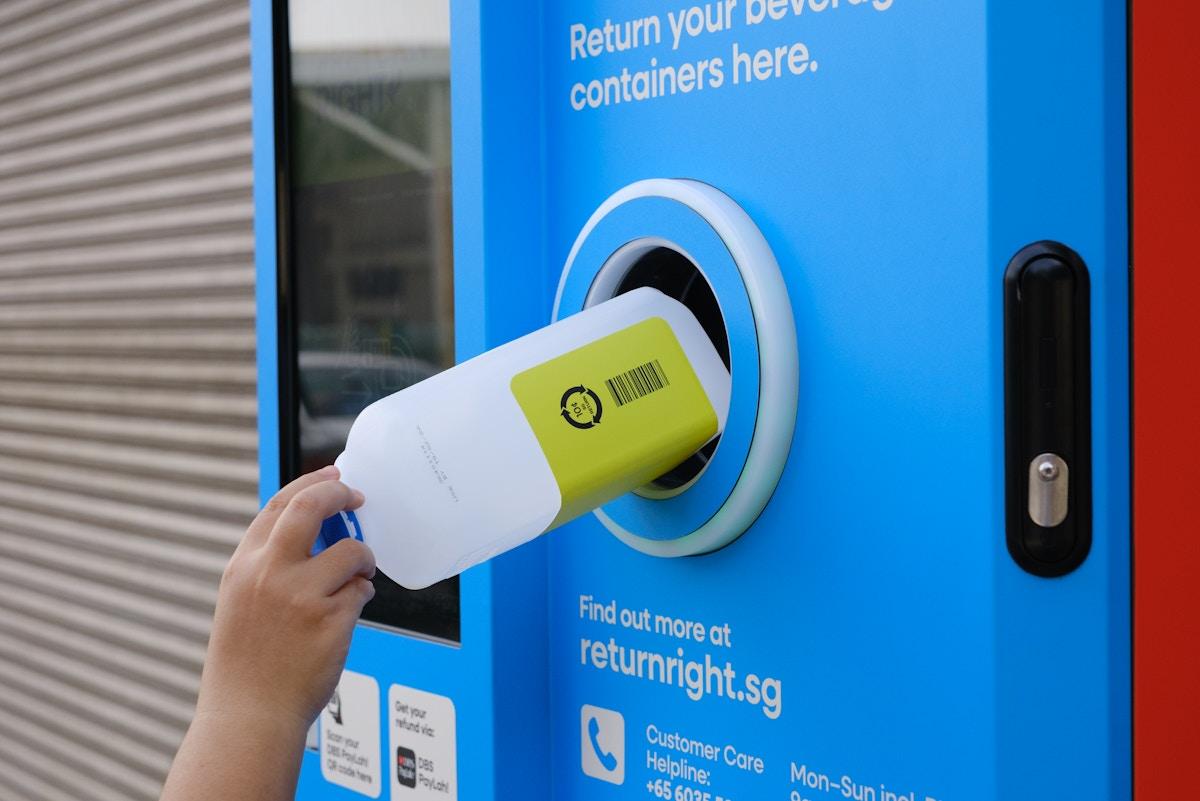
The real test begins after the bottle enters the machine: Does the material remain clean enough to recover? Can it be recycled economically? Is there a manufacturer prepared to buy it? Can it return as equivalent packaging? Will the system disclose the answer?
Singapore currently tells consumers how their containers will be collected. The next step is to make the material's complete journey equally visible.
Otherwise, a successful collection programme may look circular without proving that the material completed the circle.
This is also where the responsibility of brands begins - not ends. Brands should not manufacture disposable packaging, celebrate consumer participation and then leave recyclers to find a market for the recovered material.
Singapore became one of the world's cleanest cities by managing waste exceptionally well. Its next challenge is not simply to collect waste more efficiently. It is to prevent valuable materials from becoming waste at all.
The bottle came back.
Now Singapore - and the brands that placed it on the market - must show us what it became.