
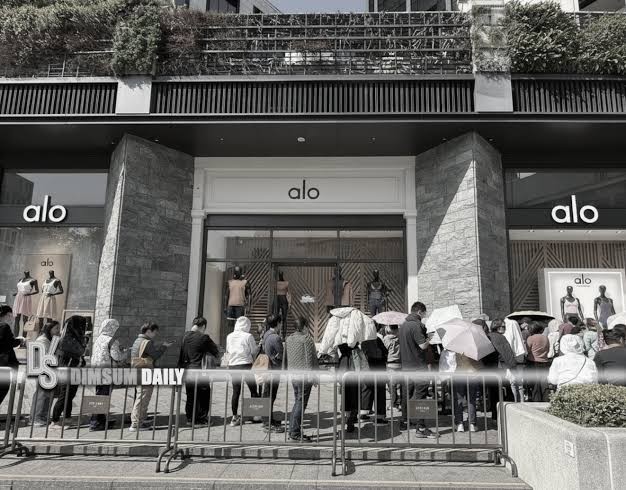
Nearly HK$20 million in seven days in Hong Kong. More than RMB10 million in one minute on Tmall in China.
These are the headlines surrounding Alo's remarkable Greater China debut.
According to the South China Morning Post, Alo generated nearly HK$20 million in its first week at Hong Kong's K11 Musea. In mainland China, Alibaba reported that Alo's official Tmall flagship exceeded RMB10 million in transactions within one minute of pre-sale balance payments opening. [1][2]
Impressive? Absolutely.
But these are exactly the kinds of headlines that make my head explode.
Every time I see another brand celebrated for selling millions in minutes, I find myself asking:
Since when did selling fast become the ultimate proof of building a great brand?
Don't get me wrong. Alo has achieved something remarkable. It has captured attention, attracted celebrities, created an aspirational lifestyle and translated that visibility into extraordinary commercial momentum.
As someone who has spent years working with brands, I understand how difficult that is.
But I keep coming back to a different question.
Beyond the logo, the celebrities and the impressive sales figures, what exactly makes Alo remarkable?
Take Away the Logo. What's Left?
I have looked at Alo's products. I have tried them.
And frankly, I struggle to find anything particularly exceptional.
The fabrics don't feel especially distinctive to me. The cuts don't make me stop and appreciate the design. And the wearing experience hasn't convinced me that the products themselves justify their premium positioning.
Of course, these are my personal impressions. Beauty, comfort and style are subjective, and many consumers clearly feel differently.
But I keep returning to one simple question.
If you removed the Alo logo, would the clothes still be desirable?
For me, probably not.
Perhaps Alo isn't really selling exceptional activewear. Perhaps it is selling something else: aspiration, belonging, wellness and the image of a particular lifestyle.
That is a perfectly legitimate business proposition.
But how long can that proposition remain compelling?
Lululemon helped make performance activewear fashionable and desirable. Today, Alo appears to be capturing a new wave of consumer attention.
Yet I wonder whether we are witnessing the birth of another enduring brand, or simply the next highly successful cultural phenomenon.
There is a difference.
And to me, that difference begins with the product.
Why I Still Look at Dior, Chanel and Balenciaga
I still follow Dior, Chanel and Balenciaga, even when I have absolutely no intention of buying anything.
Why?
Because there is often something worth looking at.
A silhouette that surprises me. An unexpected construction. A fabric interpreted in a way I hadn't imagined. A design that challenges what I consider beautiful.
I may love a collection. I may dislike it. Sometimes I completely disagree with its aesthetic direction.
But it makes me react.
Behind these fashion houses are generations of designers, craftspeople and creative directors who have developed, challenged and reinvented distinctive design languages.
Not every collection is revolutionary. Not every creative decision is successful. And luxury fashion is certainly no stranger to celebrity marketing or commercial pressure.
But at their best, these houses offer something beyond recognition and status.
They have the ability to create beauty, not simply borrow desirability.
And beauty, to me, is itself a form of product innovation.
This is why I find the role of the creative director so fascinating.
A great creative director does more than interpret trends or respond to consumer preferences. They can introduce a perspective the consumer has never considered.
They don't merely follow what people want.
They can shape what people will want next.
Which reminds me of an interview Bernard Arnault gave more than two decades ago.
Bernard Arnault: Creativity Cannot Begin with a Calculator
In October 2001, Harvard Business Review published an interview with Bernard Arnault, Chairman and CEO of LVMH, titled The Perfect Paradox of Star Brands. [3]
More than twenty-five years later, I find his philosophy surprisingly relevant.
Arnault described an organisation built around trust in its creative talent.
Rather than having executives constantly scrutinise every creative decision through financial calculations, he believed artistic directors needed room to imagine, experiment and occasionally challenge commercial expectations.
He was particularly critical of managing creative people through excessive rules, financial considerations and consumer preference data.
What fascinated me most was his distinction between satisfying consumer demand and creating genuine innovation.
Arnault acknowledged that marketing-driven companies could succeed by researching what consumers wanted and then producing it.
But he argued that this approach was fundamentally different from innovation.
Because truly original creations often begin before consumers know they want them.
Consumer research can tell us what people already like. It cannot, by itself, tell us what they have never imagined.
One example he discussed was John Galliano's experimental newspaper dresses.
An unconventional runway concept might seem commercially impractical at first. Yet the original creative idea could inspire products that eventually became commercially successful.
The creative process did not begin with a sales forecast.
Arnault's philosophy was not about ignoring business performance.
Quite the opposite.
He described a system in which creative exploration was protected, while manufacturing, execution and operational performance were managed with extraordinary discipline.
Creativity should have the freedom to lead. Business should have the discipline to deliver.
That distinction has stayed with me.
And it makes me wonder how many brands today are truly built around a creative vision, rather than a commercially validated opportunity.
Are We Building Brands or Manufacturing Popularity?
This brings me back to Alo.
I don't question the sophistication of its marketing.
Its positioning at the intersection of wellness, fashion and aspirational living is commercially intelligent. Its ability to turn cultural relevance into immediate demand is undeniable.
But marketing brilliance and creative distinction are not the same thing.
A celebrity can make a product visible.
Social media can make it desirable.
A community can make it feel meaningful.
And a spectacular launch can demonstrate the power of that excitement.
But none of these automatically makes the underlying product extraordinary.
I am not suggesting that Alo lacks creative talent or that its designers operate without freedom. I don't know enough about its internal creative process to make that judgement.
I can only judge the products I have seen and worn.
And so far, I remain far more impressed by Alo's ability to market its products than by the products themselves.
Perhaps that is enough to build a highly profitable business.
But is it enough to build a brand that lasts for decades?
Arnault made another observation in that 2001 interview that I find particularly meaningful.
He argued that becoming a truly great brand takes time, and that not every well-managed brand can achieve that status.
There must be something beyond competent management and commercial execution — something distinctive that cannot simply be manufactured through process. [3]
And perhaps that is what I am still searching for in Alo.
That distinctive creative signature.
Something that makes the product recognisable, desirable and meaningful even without the logo.
The Next Ten Years Matter More Than the First Ten Minutes
Nearly HK$20 million in seven days.
More than RMB10 million in one minute.
These are impressive commercial achievements.
But neither figure tells me how consumers will feel about the products after wearing them for six months.
Neither tells me whether customers will return when another brand becomes fashionable.
And neither tells me whether Alo will develop a creative identity that remains relevant when the current excitement fades.
Perhaps it will.
Perhaps Alo will continue to evolve, invest in stronger product innovation and develop a distinctive design language that becomes genuinely influential.
I wouldn't rule that out.
But I don't believe its remarkable sales figures are sufficient evidence that it has already achieved enduring brand power.
A successful launch proves that a brand can capture a moment. It does not prove that it can transcend one.
And the more I think about this distinction, the more I find myself returning to Bernard Arnault's philosophy.
Great brands are not built simply by knowing what will sell.
At their best, they create something worth selling in the first place.
One Final Thought: What Happens in the Age of AI?
I have been thinking for some time about how brands will be built in the age of AI.
And I don't have an answer.
AI is making it easier than ever to analyse consumers, identify trends, develop products and create marketing content.
But if everyone has access to increasingly similar data and tools, will we end up with more brands that know exactly what consumers want — and fewer brands that dare to create something different?
Or could AI do the opposite, giving truly creative people unprecedented freedom to bring their imagination to life?
I honestly don't know.
But Alo's extraordinary success, and Bernard Arnault's words from more than two decades ago, leave me with one question:
If AI can help every brand understand what consumers want, who will have the courage to create what consumers have never imagined?
Perhaps the next great brand will not be born from having better consumer data than everyone else.
Perhaps it will be born from a vision no consumer research could have predicted.
And perhaps that is where the real future of branding begins.
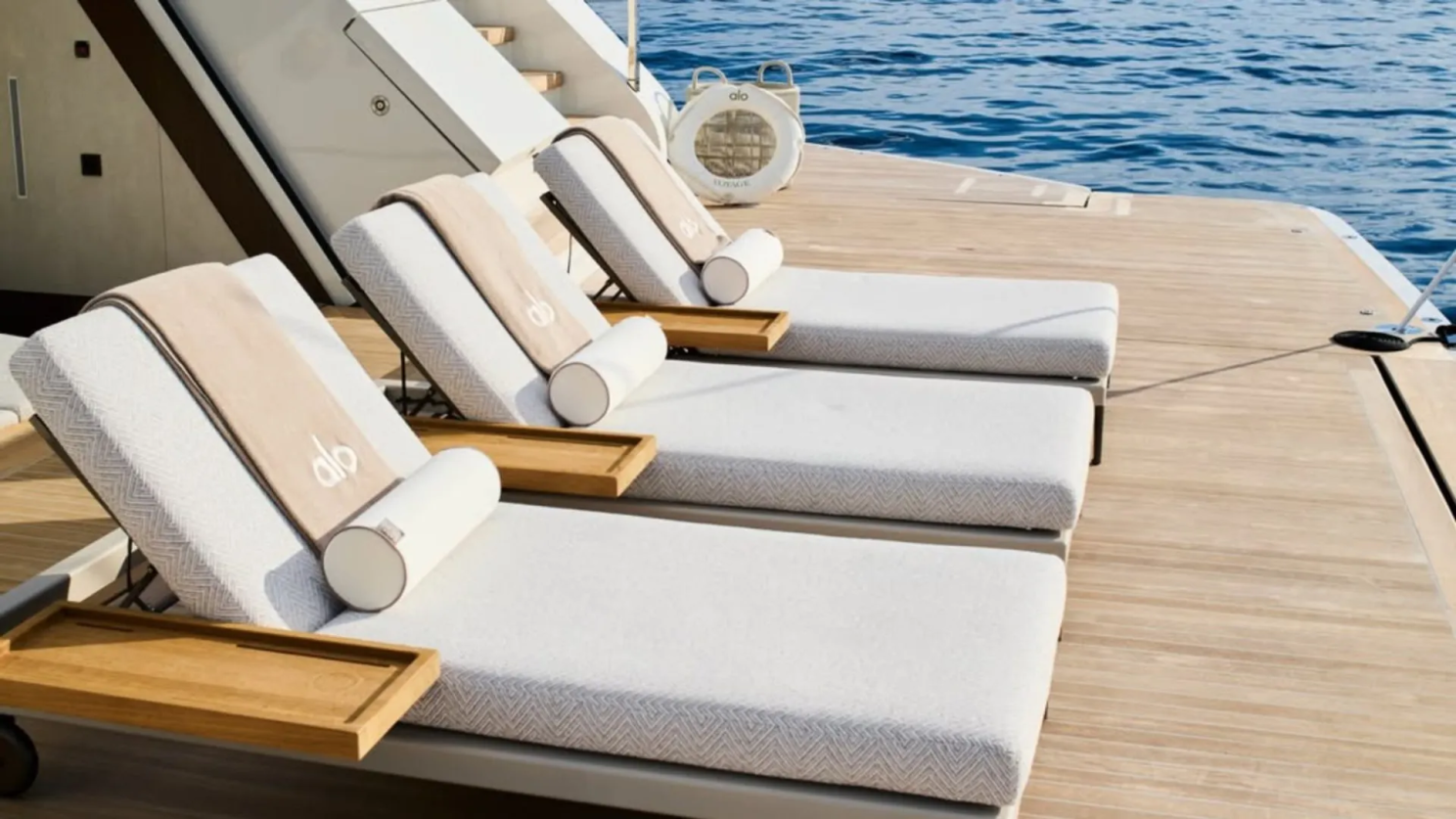
Source: Prestige Singapore — Alo Voyage: Exclusive Yacht Wellness Experience.